20 years in business · Maryland home improvement contractor · MHIC · Insured · Free estimates
Siding
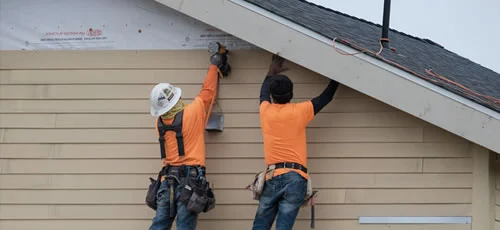
Siding Installation and Replacement
Installation on new structure, full replacement and contained repairs, with the barrier and flashing behind the siding treated as carefully as the surface you can see.
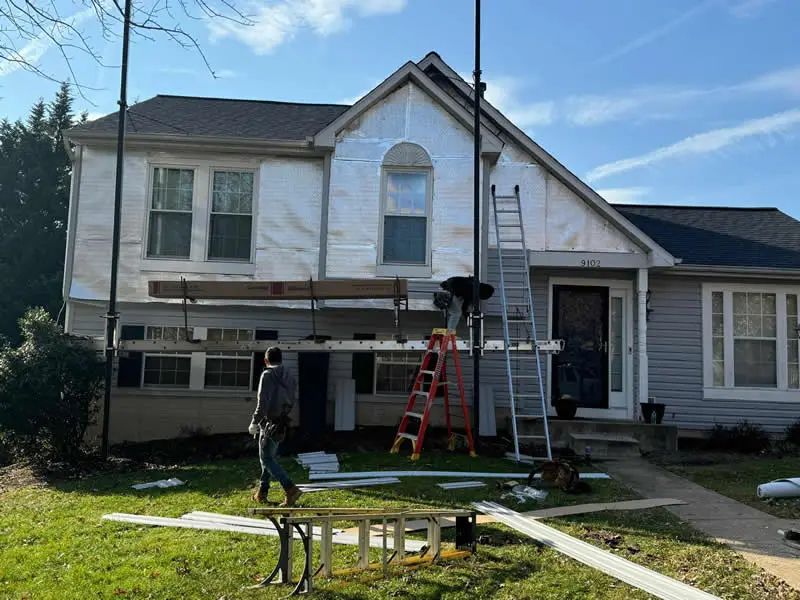
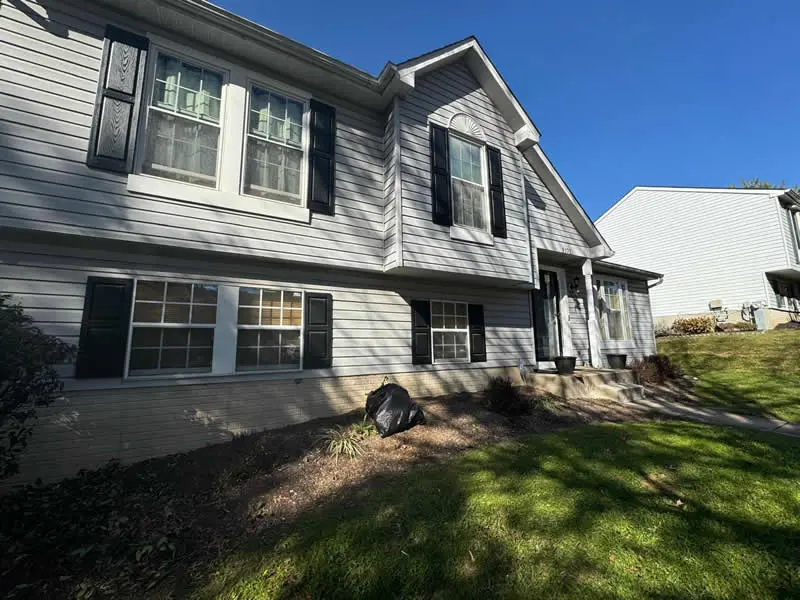
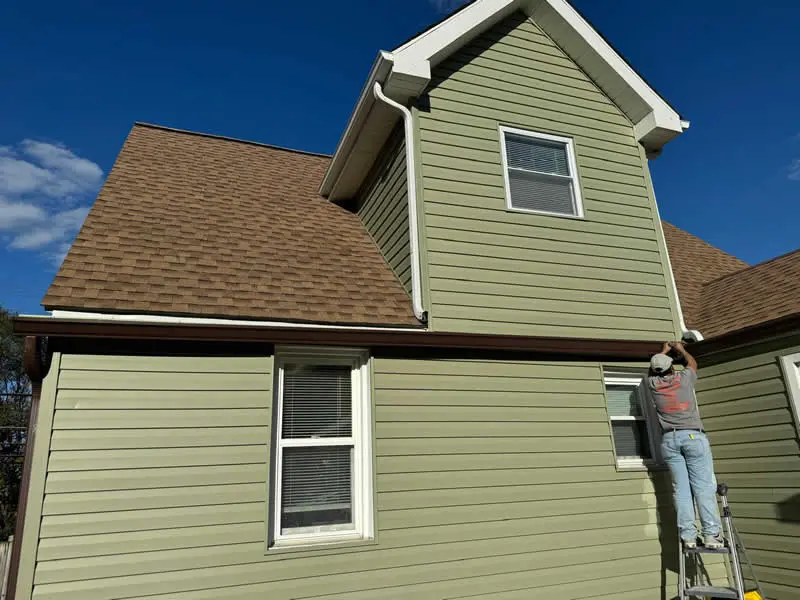
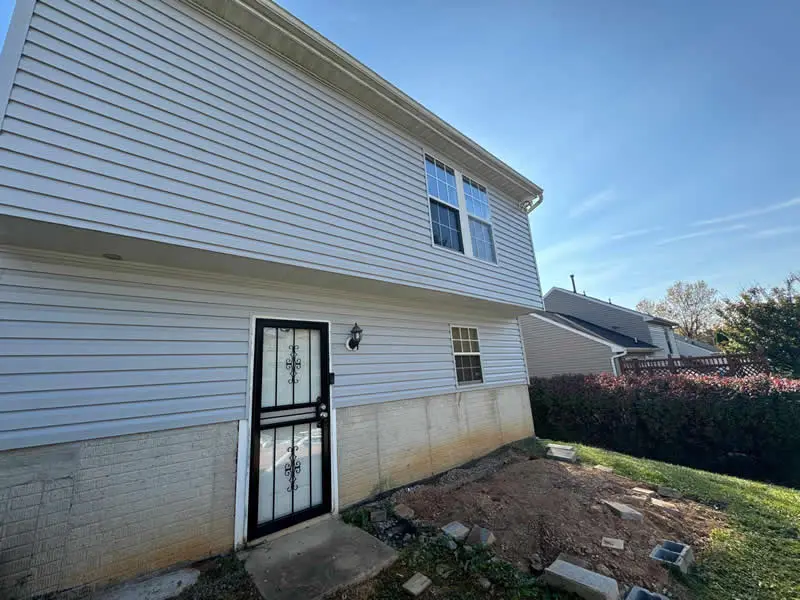
Siding is the part of a house that does the most work and gets the least thought until something goes wrong. It takes the weather, keeps water out of the wall assembly, and decides what your house looks like from the road. Tiger’s Solution LLC works as a siding contractor in Boonsboro, MD and across Washington County, handling installation on new structure, full replacement on existing homes, and repair where damage is contained. The exteriors on this page include a room addition sided and trimmed to tie into the original house, and homes where siding, soffit and fascia were treated as one system rather than three separate jobs. What matters most on a siding project happens in the layers you never see again.
What a Siding Contractor Looks For
Four things get checked before any quote is worth trusting.
What is behind the existing siding. Siding is a shedding layer, not a seal. What sits behind it, and whether water has been getting past it, decides whether this is a re-side or a repair to the wall assembly first.
The condition at the bottom. Siding fails from the ground up more often than from the top down. Splash-back, poor grade and gutters discharging against the wall show up as damage in the lowest courses and at the sill.
The penetrations. Windows, doors, hose bibs, dryer vents, electrical penetrations and anywhere a deck ledger meets the wall. These are the leak points, and how they are flashed matters more than the siding product.
The trim, soffit and fascia. These weather differently from the field, and a house re-sided with tired trim left in place looks half finished within a season.
Siding Installation, Replacement and Repair
Three different projects with three different conversations.
Installation on new structure is the simplest, because everything behind it is new and correct. Additions, garages and outbuildings fall here. The challenge is not the wall; it is matching the new work to the existing house.
Replacement means the old siding comes off and the wall gets inspected before anything new goes on. This is the only version where you find out what has actually been happening behind it, which is why replacement gives a better outcome than covering over.
Repair suits contained damage: a section damaged by impact, a run of courses that failed at the base, or damage from a leak that has been fixed. The honest limitation is colour. Siding fades, and a patched section on a prominent elevation usually shows. Where an exact match is not possible, taking material from a less visible elevation and patching there instead is often the better move.
What We Can Help With
- Siding installation on new structure, additions and outbuildings
- Full siding replacement
- Siding repair and section replacement
- Trim, corner posts and J-channel detailing
- Soffit and fascia installation and replacement
- Gutter and downspout coordination
- Water-resistive barrier and flashing at penetrations
- Window and door trim wraps
- Repairs to sheathing and framing found during removal
- Exterior material selection
What Happens Behind the Siding
This is the part of the job that decides whether the house is dry in ten years, and it is entirely invisible once the work is done.
Water gets behind siding. That is expected and normal. What matters is that it can drain and dry rather than sitting against sheathing. The water-resistive barrier, and how it is lapped, is what makes that happen.
Flashing at every penetration is the other half. Window heads, door heads, deck ledgers and anywhere a lower roof meets a wall all need flashing that directs water out over the siding rather than behind it. A perfect installation with one wrong flashing detail leaks at that detail. This is the part you are actually hiring a siding contractor to get right.
When old siding comes off, this is also when damaged sheathing gets found and dealt with. Nobody can promise in advance that there is none. What we can do is agree in writing how it is handled and at what rate, so a discovery is a documented decision instead of an argument on a Tuesday morning.
Trim, Soffit, Fascia and the Transitions
The field of a wall is the easy part. The character and the durability are in the edges.
Soffit and fascia sit where the roof meets the wall, and they take gutter overflow, ice and wind-driven rain. They also carry the ventilation intake for the roof above, which is a detail that gets destroyed surprisingly often by people covering soffit vents while re-siding.
Corners, J-channel around windows and the transitions where siding meets brick, stone or a different material are where installation quality is visible from the street. Consistent reveals and clean terminations are the difference between a professional job and a fast one.
Where an addition meets an original house, the transition is a design decision as much as a technical one. Running new siding to a corner rather than stopping mid-wall is almost always the better answer.
How a Siding Project Runs
- Initial conversation. What is failing, whether you are re-siding all or part of the house, and whether trim, soffit and gutters are in scope.
- On-site review. We look at the base courses, the penetrations, the trim condition and the drainage around the house.
- Scope and selections. Material, colour, trim details and the rate for any sheathing repair, all in writing.
- Removal and installation. Barrier and flashing before siding, then field, then trim and terminations.
- Cleanup and final walkthrough. Site cleared of fasteners and offcuts, and a walk around the house together.
Siding for Homes Around Boonsboro
Exposure varies a lot in this part of Washington County. A house tucked below the ridge and a house on an open slope facing west take completely different amounts of wind-driven rain and sun, and it shows in how their siding ages. South and west elevations fade faster and fail earlier, which is worth knowing when deciding whether to do the whole house or one side.
Older homes around Boonsboro, Keedysville and Sharpsburg frequently have more than one generation of exterior material, sometimes with the original still underneath. What is under there affects the plan, and any siding contractor should check it before quoting rather than after.
Freeze-thaw is the local factor that punishes bad detailing. Any place that holds water instead of shedding it will find its limit here faster than in a milder climate.
Siding Questions
Sometimes it is possible, but it is usually not the better choice. Covering over means nobody inspects the wall underneath, so any damage or moisture problem stays hidden and keeps working. It also builds up thickness at windows, doors and corners, which affects how the trim details land. Removing the old material costs more and tells you the truth about the wall.
Not necessarily. Elevation-by-elevation replacement is legitimate, particularly when one side has taken far more sun and weather than the others. The consideration is colour matching, since new material next to weathered material shows. Stopping at a corner rather than mid-wall makes the difference read as intentional. We will show you where the transition would fall.
We agree a rate for sheathing repair in writing before starting, so the price is known rather than negotiated once the wall is open. We photograph what we find and show you. Some houses need none. Houses with long-standing gutter problems or bad flashing at a deck ledger often need work in those specific areas.
Soffit and fascia are usually worth doing at the same time, since they are accessible while the crew is set up and they weather differently from the siding field. Leaving tired trim against new siding tends to look unfinished quickly. The extent of gutter work we take on is worth confirming directly for your project.
It depends on your exposure, your maintenance appetite and your budget, and the honest starting point is what the house already has and how it has performed. Materials differ in impact resistance, how they handle sun and how they are repaired later. We will go through what suits your elevations rather than recommending one product for every house.
The siding itself is a shedding layer rather than insulation, so the honest answer is that the gains come from what happens during the project: sealing air leaks, correcting flashing and, on some projects, adding insulating material behind the siding. Those are worth discussing while the wall is open, because it is the only convenient time to do them.
Let’s Walk Around the Outside of Your House
If the bottom courses are failing, a section has been damaged, or the exterior has simply reached the end of its life, the useful first step is looking at it together. We will check the base, the penetrations, the trim and where your water is going, and put a written scope together covering the parts you can see and the layers you cannot. Tiger’s Solution handles siding for homes in Boonsboro and across Washington County. Call +1 240-253-3742 or reach us through our contact form. Call +1 240-253-3742 or send us the details through the contact form.