20 years in business · Maryland home improvement contractor · MHIC · Insured · Free estimates
Roofing
Roof Replacement and Repair
Replacement, repair and inspection, with the flashing, the decking and the ventilation checked as carefully as the shingles. We photograph what we find under the old material.
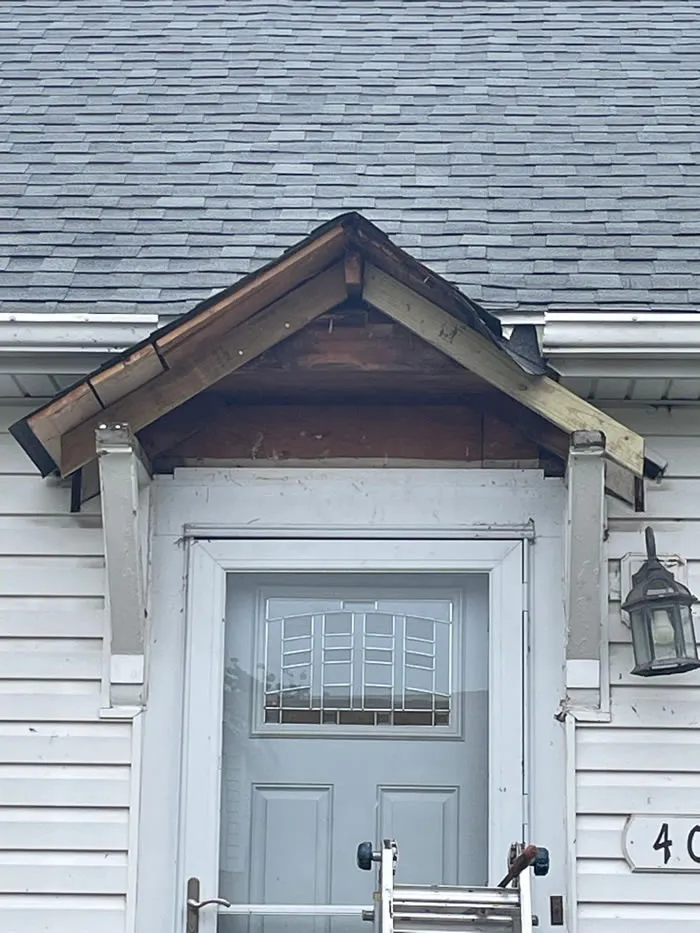
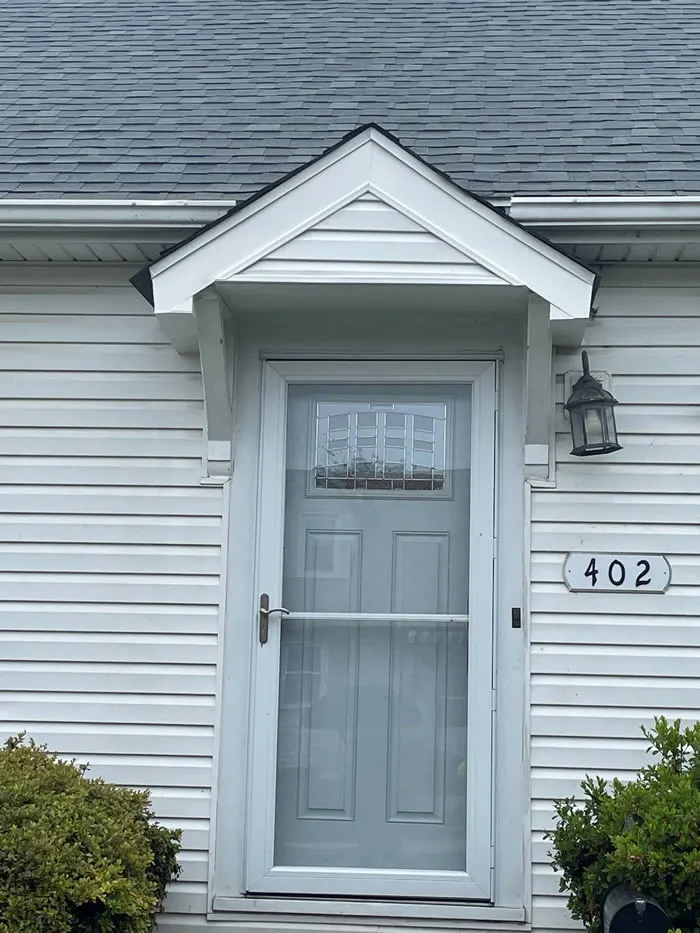
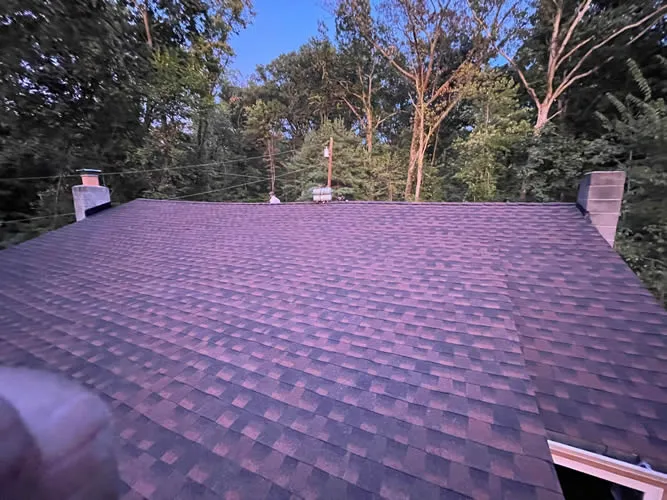
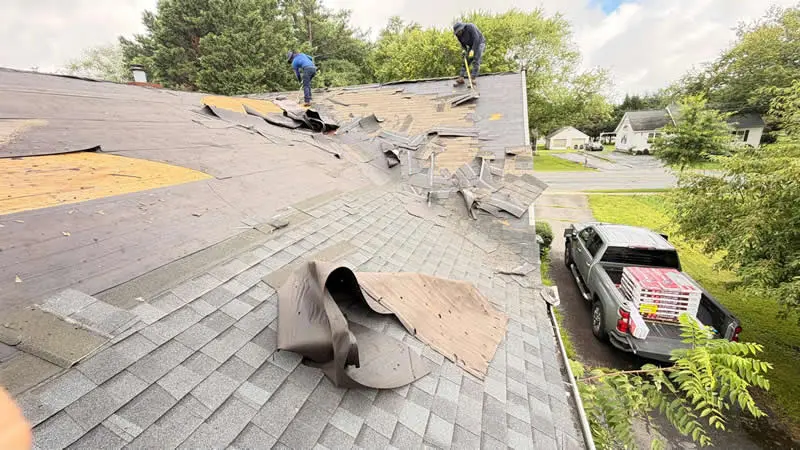
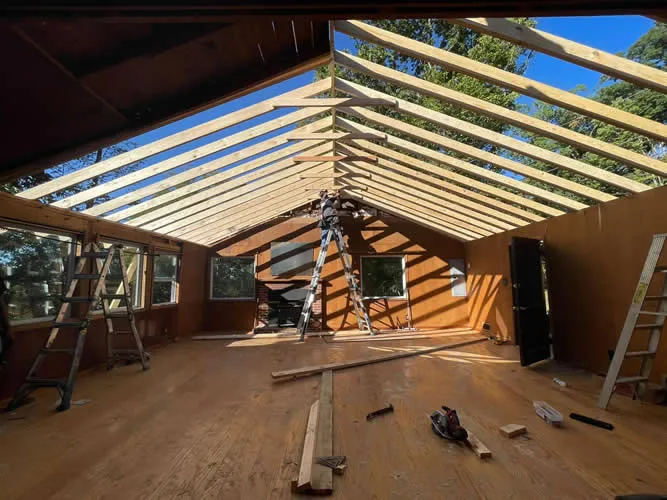
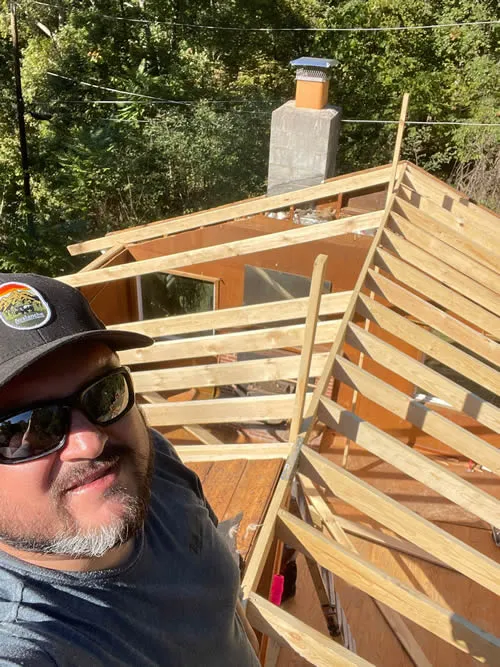
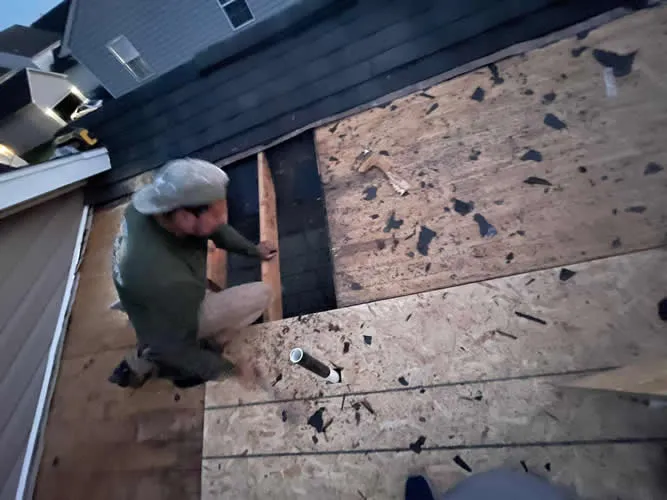
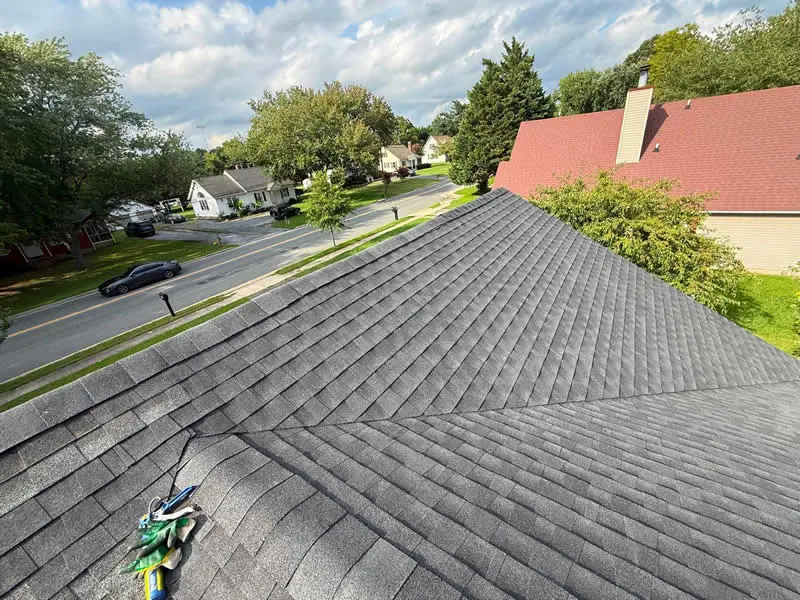
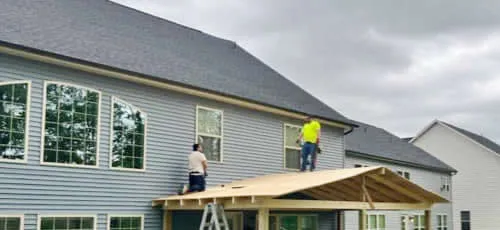
A roof gives very little warning. It performs perfectly for years, then reports its condition through a ceiling stain, a missing shingle after a storm, or a soft patch of decking that somebody notices only once the old material comes off. Tiger’s Solution LLC works as a roofing contractor in Boonsboro, MD and across Washington County, handling roof replacement, repair, inspection and the framing work that sometimes turns out to be underneath. The photographs on this page include a full tear-off with new rafters and sheathing, a finished shingle roof, and a rotted entry overhang rebuilt from the framing out. We photograph what is under the shingles because that is where the actual condition of a roof lives.
What a Roofing Contractor Should Check Before Quoting
A number quoted from the driveway is a guess. Four things need looking at properly.
The field of the roof. Shingle condition, granule loss, cupping, and whether there is more than one layer already up there. A second layer changes both the work and what can legally go on top.
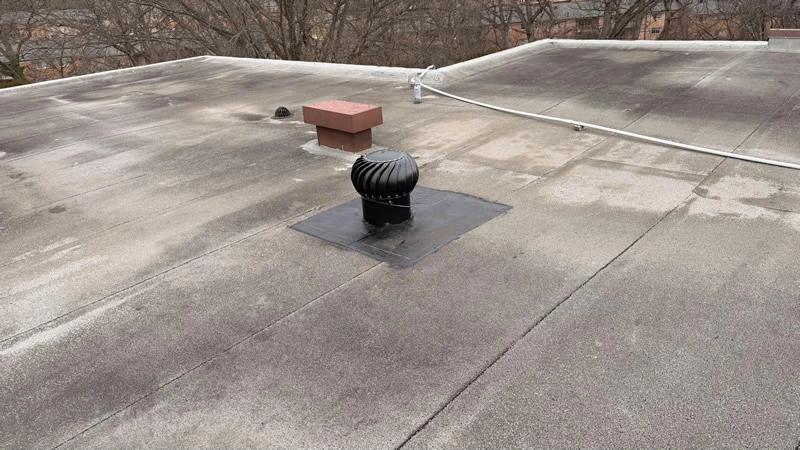
The penetrations and transitions. Most leaks are not in the middle of a roof. They are at chimneys, vents, valleys, skylights and the places where two roof planes or a roof and a wall meet. Flashing is where roofs actually fail.
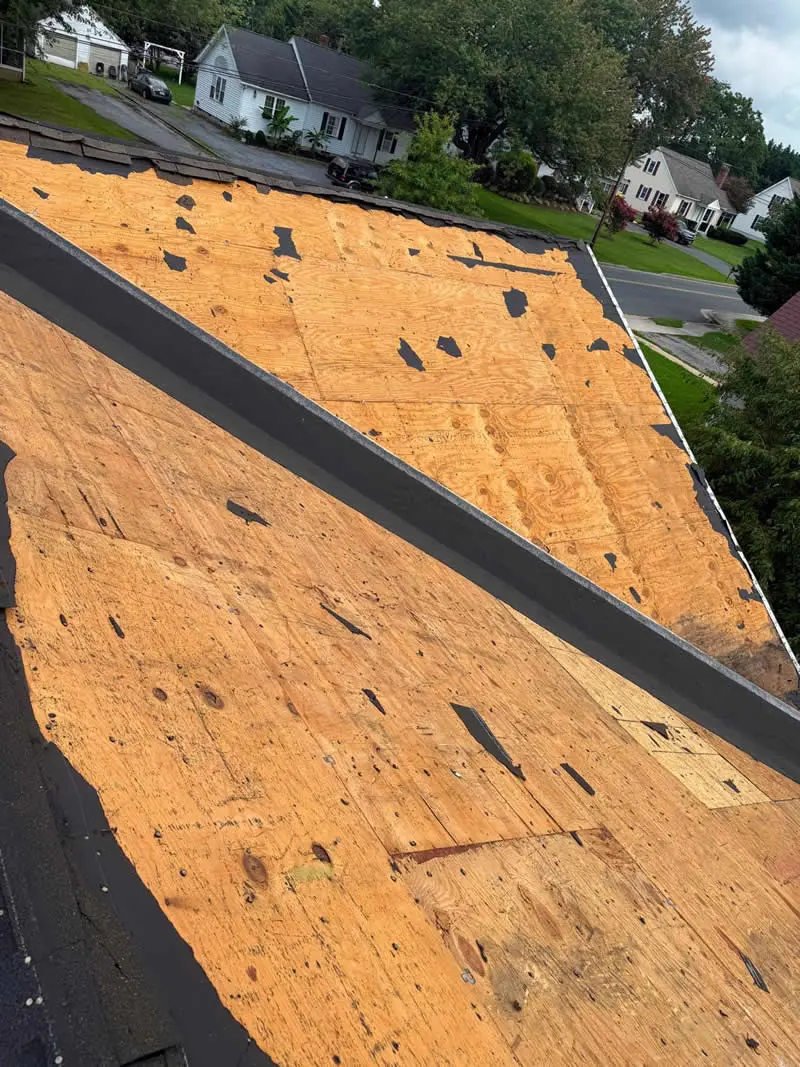
The decking. From the ground it is invisible. From on top you can find soft areas by walking it, but the honest answer is that tear-off is what tells you, which is why decking replacement belongs in a quote as a defined rate rather than a surprise.
Ventilation. A roof that cannot breathe cooks its own shingles from underneath and shortens their life considerably. Intake at the soffit and exhaust at the ridge have to be balanced.
Roof Replacement, Repair and Inspection
These are separate services and they get quoted separately.
An inspection is worth doing after a significant storm, before buying a house, or when something inside has changed. We look at the field, the flashing, the ventilation and any interior evidence, and tell you what we find, including when the answer is that the roof is fine.
A repair is right when the damage is contained and the rest of the roof has life left. A section of missing shingles, a failed flashing detail at a chimney, or a leak traced to one penetration are all legitimate repairs. Repairs are honest work when they buy real years.
A replacement is right when the field is at the end of its life, when there is widespread granule loss and curling, or when repeated repairs are treating symptoms of a roof that is finished. When a repair is only postponing the inevitable by a season, we will say so rather than sell it to you. A roofing contractor who only quotes replacements is not giving you that choice.
What We Can Help With
- Roof replacement and full tear-off
- Roof repair and section replacement
- Roof inspection and leak diagnosis
- Roof decking and sheathing replacement
- Roof framing and rafter work
- Flashing at chimneys, walls, valleys and penetrations
- Ridge and soffit ventilation
- Porch, entry and overhang roofs
- Roofing on garages, additions and outbuildings
- Storm-related damage assessment
- Residential and commercial roofing
When Repair Makes Sense and When It Does Not
Homeowners usually ask this the wrong way round. The question is not whether a repair is possible; it is whether it is worth doing.
A repair makes sense when the roof has meaningful life left, when the damage has a clear cause, and when the repair addresses that cause rather than covering it. Storm damage to one slope on an otherwise sound roof is the clearest example.
A repair stops making sense when the field is uniformly worn, when you have already repaired the same roof more than once, or when the fix would be visually obvious on a prominent elevation. It also stops making sense when the decking underneath has gone, because a shingle repair over failed sheathing does not hold.
The entry overhang on this page is a good example of the middle ground. The damage was contained to one structure, so rather than touching the main roof, that overhang was rebuilt from the framing out and finished to match.
Decking, Framing and What a Tear-Off Reveals
The single most common surprise on a roofing project is what is under the old material.
Decking can be soft near valleys and chimneys where water has been running for years. It can be plank rather than sheet on older homes, with gaps that need addressing. It can also be perfectly sound, which is the outcome everyone wants and nobody can promise in advance.
Occasionally the framing itself has moved. Rafters that have been carrying more snow load than they were sized for, or a structure that has been repaired badly in the past, are found once things are open. One of the projects on this page went that far: new rafters across the whole structure before any roofing material went on.
This is why we put a decking rate in writing before starting. You are not agreeing to an unknown; you are agreeing to a defined price per sheet if it turns out to be needed.
How a Roofing Project Runs
- Initial conversation. What you are seeing, when it started, and whether it followed a storm.
- On-site inspection. Field, flashing, penetrations, ventilation and any interior evidence, with photographs of what we find.
- Scope and proposal. Replacement or repair, with the decking rate, ventilation and flashing work defined in writing rather than left open.
- Tear-off and installation. Protection of the grounds, tear-off, decking assessment, underlayment, flashing, field and ridge.
- Cleanup and final walkthrough. Magnet sweep of the property, and a walk through the work with you.
Roofing Around Boonsboro and Washington County
Roofs on this side of the county work harder than most. Wind coming off South Mountain, snow load in a bad winter, and a freeze-thaw cycle that runs through the shoulder seasons all put stress on fasteners, flashing and any detail that holds water rather than shedding it.
Older houses around Boonsboro, Keedysville and Sharpsburg often have plank decking, multiple layers of history, and chimneys that need proper flashing rather than a bead of sealant.
Choosing a roofing contractor based nearby matters most when something is actively leaking. A tarp goes on faster when the crew is not driving in from another county, and a follow-up visit does not have to be scheduled around a long trip.
Roofing Questions
The deciding factors are how old the roof is, whether the wear is contained or across the whole field, and whether the damage has a single identifiable cause. Widespread granule loss, curling and repeated leaks in different places point to replacement. One damaged slope, a failed flashing detail or storm damage in one area usually points to repair. An inspection answers it properly.
We agree a rate for decking replacement in writing before the job starts, so if it is needed you already know the price rather than negotiating on a roof that is currently open. We show you what we find. Some roofs need none, some need a few sheets around a valley or chimney, and older homes with plank decking sometimes need more.
We can inspect and document what we find after a storm, including photographs of the damage. The extent to which we assist with an insurance claim process is worth confirming with us directly rather than assuming, since it varies. What we will not do is tell you damage exists when it does not.
More than most homeowners expect. A roof without balanced intake and exhaust runs hot in summer, which ages shingles from underneath, and traps moisture in winter, which affects the decking and the insulation below. Correcting ventilation during a replacement is straightforward and inexpensive relative to the job. Adding it afterwards is neither.
In some situations it is permitted and in others it is not, and even where it is allowed it is often the wrong choice. Going over existing shingles hides the decking, meaning nobody knows what condition it is in, and it adds weight and heat. It also shortens the life of the new layer. We will tell you what your roof will allow and what we would recommend.
Yes, and they are more common than people expect. Entry overhangs, porch roofs and small structures take the same weather as the main roof with far less material protecting them, and they are frequently the first thing on a house to fail. One of the projects shown here is exactly that: a rotted entry overhang rebuilt from the framing out.
Get the Roof Looked At Properly
If you have a stain on a ceiling, shingles in the yard after a storm, or a roof you simply know is getting old, an inspection is the sensible first step. We will go up, look at the flashing and the ventilation as well as the field, photograph what we find, and tell you whether you are looking at a repair or a replacement. Tiger’s Solution works on roofs across Boonsboro and Washington County. Call +1 240-253-3742 or send us the details through the contact form.