20 years in business · Maryland home improvement contractor · MHIC · Insured · Free estimates
Flooring Installation
Flooring Installation and Replacement in Boonsboro
Tile, plank and hardwood laid over subfloors that were checked and prepared first, with transitions and trim finished so the room reads as one piece.
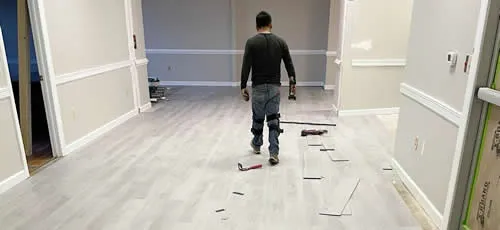
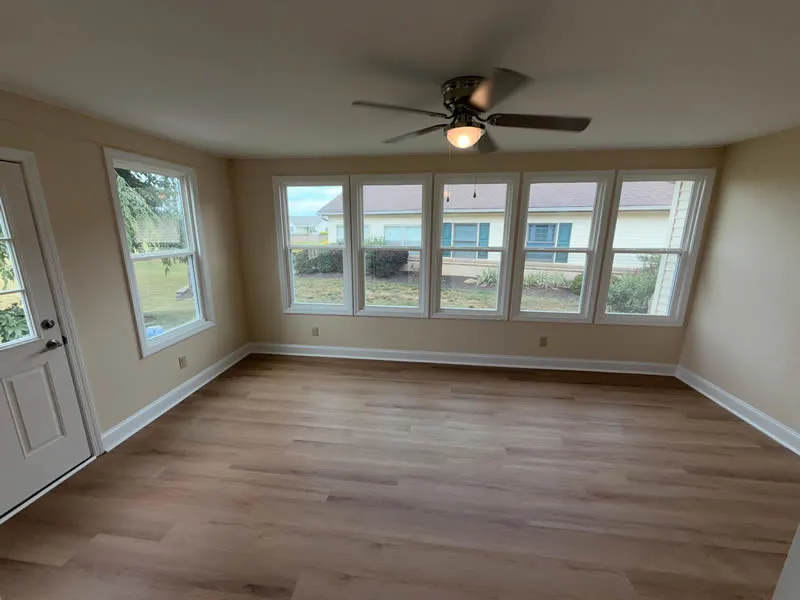
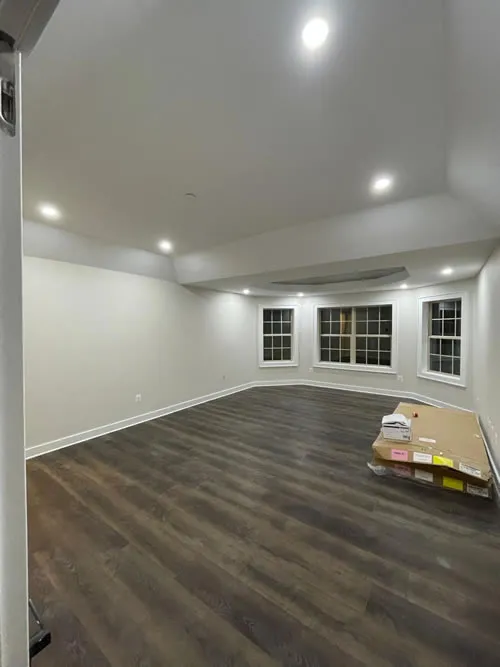
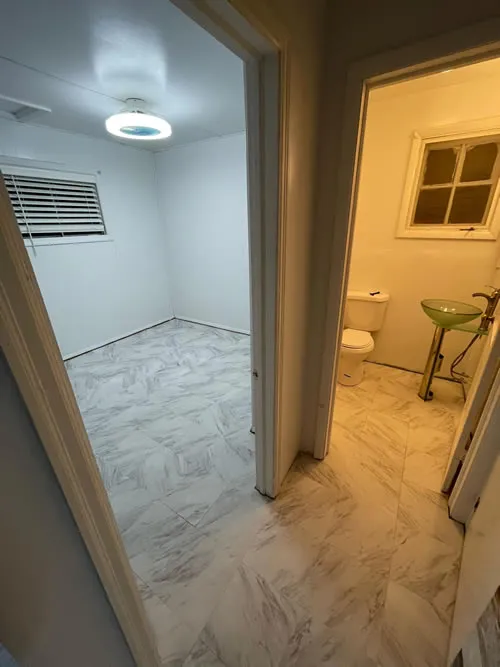
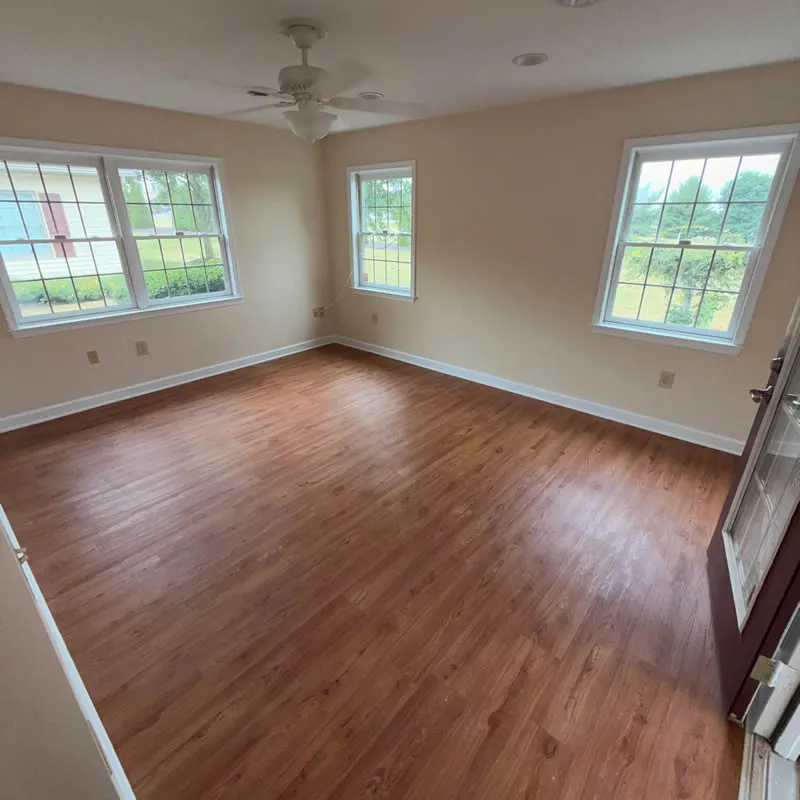
Floors are the one finish in a house that every person touches, every day, in every room. They also fail in the most visible way: a soft spot near a dishwasher, a seam that lifts in a hallway, tile that cracks along a line because nothing underneath was ever flat. Tiger’s Solution LLC handles flooring installation in Boonsboro, MD and across Washington County, covering full replacements, single rooms, subfloor repair and the transitions between one material and the next. The photographs on this page are from finished work, including a tile floor run through a hallway and half bath and a plank floor laid through a large front room. What decides how long either one lasts happens before the first board goes down.
What Flooring Installation Actually Involves
Most of a flooring project is not the flooring.
It starts with removal. Old material has to come up, and what is under it decides the rest: plywood in good shape, a slab that needs leveling, an older subfloor with soft areas near a bathroom or an exterior wall, or three previous floors stacked on top of each other because nobody wanted to pull them.
Then comes preparation. Every material has a flatness tolerance, and tile is the least forgiving of them. A floor that reads as fine underfoot can still be out of tolerance enough to crack grout lines within a year.
Only then does installation start, followed by the parts that make it look intentional: transitions at doorways, thresholds where two materials meet, and the baseboard or shoe molding that closes the perimeter.
Subfloor Preparation, the Part You Never See
This is where the difference between a good floor and a callback lives.
On wood subfloors we look for movement, fastener condition and any area that has taken on water. Soft plywood near a toilet, a tub or a door is common in older houses around here, and covering it rather than replacing it guarantees the same problem returns through a new floor.
On concrete slabs, particularly below grade, flatness and moisture both matter. A slab that reads dry in August can behave differently in spring. Materials that tolerate that swing exist, but the slab still needs to be flat and clean for anything to bond or float correctly.
Where a house has settled, a floor is rarely level, and the honest conversation is about how much correction is worth doing. Sometimes leveling a whole room is right. Sometimes it is smarter to correct locally and accept the rest.
What We Can Help With
- Full-home and single-room flooring installation
- Removal and disposal of existing flooring
- Subfloor inspection, repair and replacement
- Underlayment and moisture considerations for below-grade rooms
- Tile floor installation, including bathrooms and entryways
- Plank and resilient flooring installation
- Hardwood installation and replacement
- Stair treads, landings and transitions
- Thresholds and material-to-material transitions
- Baseboard and shoe molding after installation
- Floor repair and section replacement
Choosing Flooring Room by Room
The right floor depends less on taste than on what the room does to it.
Kitchens see spills, dropped pans and standing traffic in front of the sink and range. That argues for something water-tolerant and hard to dent, with a surface that hides crumbs rather than showcasing them.
Bathrooms are wet, small and full of edges. Tile handles it well, and the layout question is usually how the pattern meets the tub, the vanity and the door.
Basements sit on concrete and swing with humidity. Solid hardwood is the wrong answer below grade in almost every case. Materials that tolerate moisture and expand predictably belong there.
Bedrooms and living areas have the most freedom, which is why they are usually where a homeowner decides the look for the rest of the house.
Hallways and entries take the most abuse per square foot in the entire home, and they are worth over-specifying rather than under-specifying.
Replacement, Repair and Transitions
Not every flooring problem needs a whole floor.
A section replacement works when the material is still available and the damage is contained, such as water damage under a failed appliance. The honest limitation is that a repair rarely disappears completely. Dye lots shift and floors age under light, so an exact blend is unusual.
A full replacement makes sense when the damage is widespread, when the subfloor needs work anyway, or when you are changing material and the transitions would otherwise multiply.
Transitions deserve more attention than they usually get. Every doorway where two materials meet is a decision: which one runs through, where the break falls, and whether the threshold reads as deliberate. Getting this wrong is the most common reason a technically fine floor looks amateur.
How a Flooring Project Runs
1. Initial conversation. Which rooms, what you want out of the material, and whether furniture and appliances need moving.
2. On-site review. We measure, check the existing floor and what is under it where we can, and look at doorways, transitions and how much of the house stays in use.
3. Scope and selections. Material, quantity, subfloor work and transitions in writing, including how unforeseen subfloor damage is handled.
4. Removal, preparation and installation. Preparation gets its time; that is what the finished floor is riding on.
5. Final walkthrough. We check transitions, thresholds and trim with you and close out the list.
Flooring Installation Around Boonsboro
Older houses in and around Boonsboro, Keedysville and Sharpsburg tend to have settled framing, original subfloors and floors that have been covered more than once. Those projects usually involve more preparation than the homeowner expected, and we would rather say that at the walkthrough than discover it on day two.
Newer homes out toward Hagerstown and along the Route 40 corridor bring the opposite situation: flat, sound subfloors and builder-grade material that has simply worn out. Those go faster, and the conversation shifts to material choice rather than repair.
Local humidity swings affect every material that moves seasonally. Acclimating flooring properly before installation is not an optional step here.
Flooring Questions
We will agree on this before the work starts so nobody is surprised on the first morning. Furniture handling, appliance disconnection and reconnection, and where things get staged during the project all belong in the written scope. Appliance disconnection in particular may involve a licensed trade depending on what is connected.
Sometimes, and sometimes it is a bad idea. Installing over an existing floor can work when the surface is flat, sound and firmly attached, and it saves removal time. It is the wrong call when the existing floor is hiding damage, when the added height creates problems at doors and appliances, or when the material underneath is already moving. We will tell you which situation you are in.
Look for scratch resistance, water tolerance and a surface texture that hides wear rather than highlighting it. Very smooth, very dark and very glossy finishes show everything. There is no single right answer, because a household with a large dog and one with a toddler stress a floor differently. Tell us how the room gets used and we will narrow it with you.
It is worth investigating rather than covering. A soft area usually means the subfloor has taken on moisture, from a plumbing leak, a failed appliance, or water tracked in over years. Laying new flooring over it hides the symptom and keeps the cause. We open it up, find out how far it goes, and repair the structure before anything new goes down.
In an older house, probably not perfectly, and that is normal. Houses settle. What matters is that the floor is flat enough for the material to perform and that any slope is consistent rather than abrupt. We will tell you what we measure and what correcting it would involve, so you can decide how much is worth doing.
Often yes, at least partly. Removing baseboard to install flooring rarely leaves it reusable, and a new floor at a different height changes where the base sits. Shoe molding can absorb a small difference. A larger one shows. This is worth deciding before material is ordered rather than after installation.
Let’s Look at What Is Under Your Floor
If a room has a soft spot, a lifting seam or a floor you have simply stopped liking, tell us which rooms you have in mind. We will measure, check what is underneath where we can, and put a written scope together covering preparation, material and transitions. Tiger’s Solution handles flooring installation for homes in Boonsboro and across Washington County. Call +1 240-253-3742 or send us the details through the contact form.